
What are they all about?
- A neat and tidy garden is often a sterile garden with no room for wildlife to flourish.
- In the UK we are losing our wildlife more rapidly than any other European country.
- Intensive farming is driving wildlife out of the countryside and more urban spaces.
- We need to adapt our gardens to provide homes, food and water for wildlife.
How do they work?
- Our local wildlife groups have a 24-point action plan to help you create a wildlife garden.
- You can use the criteria in the Wildlife Gardens Awards to change your current window box, balcony or garden into an area more friendly for wildlife.
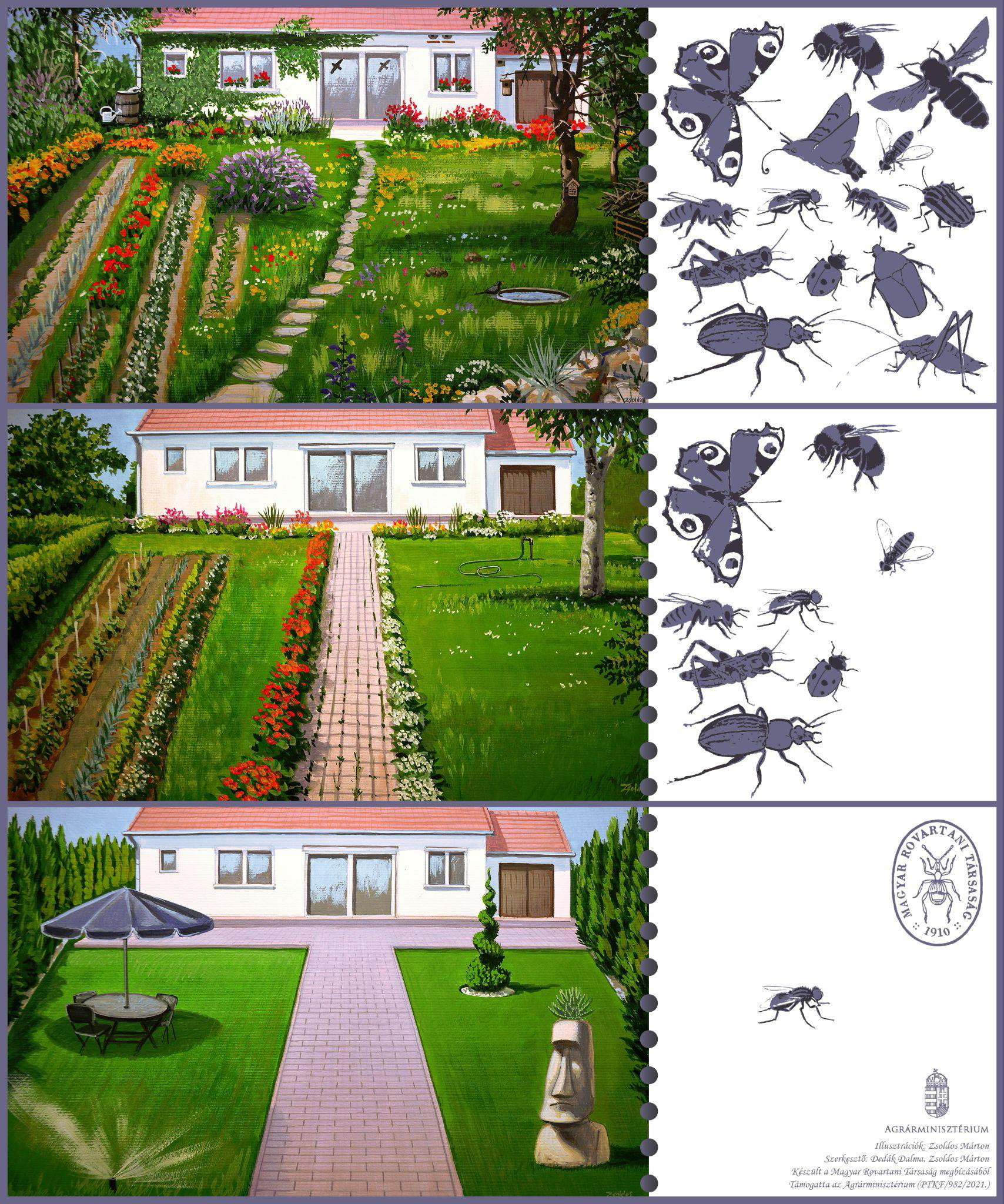
This image from the Hungarian Entomological Society highlights the importance of diverse gardens and the decline in insect diversity when gardens become a monoculture of grass and patio.
“Reduce Carbon, Increase Nature, … Save Money!”
Will it work for you?
- It should save you time – less time mowing the grass, less time “weeding”.
- It should save you money – no expenses on pesticides.
- Even the tiniest space like a window box can make a difference to a passing insect.
- You may get some criticisms from others that your garden looks untidy but explain to them why you have made the change.
Read more about the Borough Wildlife Gardens Awards: https://wildlifegardensawards.org/
Follow the advice at the Royal Horticultural Society: https://www.rhs.org.uk/wildlife
How does this help: reduce carbon, increase nature, save money?
- Carbon will be reduced through less use of fuel to mow the lawn, less use of pesticides and fertilisers.
- Nature will be increased by creating habitats and providing food.
- Money will be saved through growing perennial self-seeding “wild” plants rather than having to buy tender annuals from the garden centre.
- There is rarely any investment upfront, in fact, you’ll probably see fairly quick savings.
Where can you get more help?
Local organisations that can put you in touch with other wildlife gardeners:
- Wild Maidenhead:
- Wild Cookham:
- Wild Windsor:
- Wild Eton Wick:
- Wild about Datchet:
- Wildlife in Ascot:
- Nature’s Haven:
For more information please visit or contact us at the ECO Action Hub in Maidenhead.
NB This factsheet provides information only, collated from public sources and individuals with relevant experience, and does not constitute advice. You should verify any information, including its applicability to your circumstances, before making any decisions based on it. The authors do not guarantee its accuracy.
Date Published: 15/02/2024
Written by: Angela Alexander – ECO Action Hub Coordinator
Reviewed by: Paul Conacher – ECO Action Hub Marketing Lead