
“Actions for a greener, healthier future!”
What is it all about?
- Compost is vital for maintaining soil structure and fertility without using artificial fertilisers or peat-based products.
- It serves as a primary mechanism for plants to capture carbon dioxide and turn it into leafy growth.
How does it work?
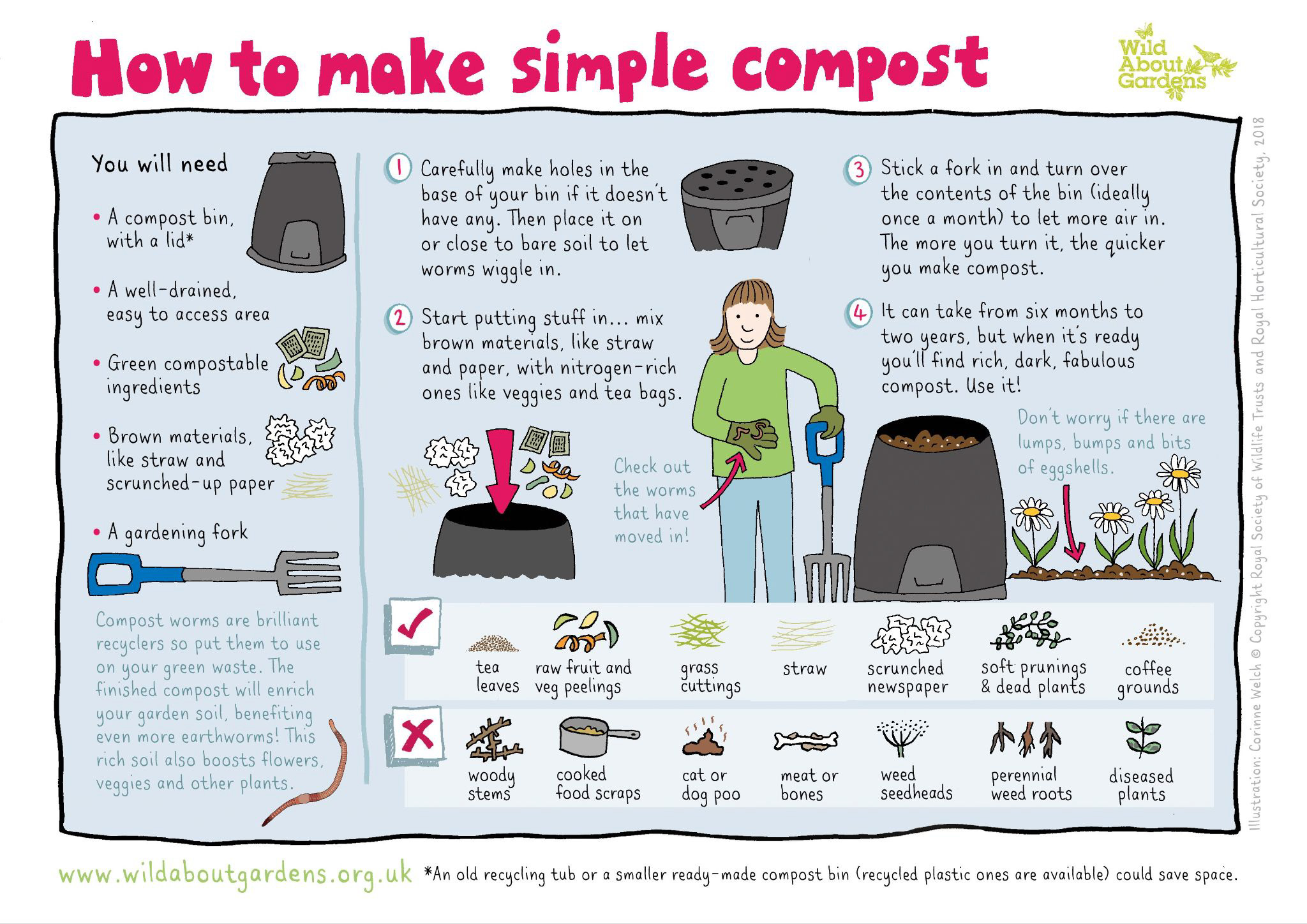
- Living organisms like earthworms, beetles, fungi, and bacteria break down organic material into nutrient-rich soil.
- A successful heap requires a mix of Nitrogen-rich “Greens” (fruit peelings, coffee grounds, grass, wool, fur) and Carbon-rich “Browns” (cardboard, egg boxes, wood chips, twiggy stems, autumn leaves).
- Oxygen and water are essential for the process to work efficiently.
- Standard bins should avoid meat, fish, or dairy to prevent attracting pests, though these can be handled in specialized wormeries or Bokashi bins.
Will it work for you?
- You need a garden space for a bin; these can be built for free using old pallets or found via Freecycle.
- Discounted bins are often available through local council partnerships at getcomposting.com.
How does this help: carbon, nature, and money?
- Carbon: Reduces greenhouse gas emissions from landfills and promotes carbon sequestration in plants.
- Nature: Finished compost enriches the soil and supports high levels of garden biodiversity.
- Money: Saves money on purchasing commercial compost and chemical fertilisers.
For further guidance, visit Gardeners’ World, the RHS, or the Maidenhead Veg Growers Facebook group.
Date Published: 15/02/2024 | Written by: Angela Alexander & Carolyn Foster