
What is this all about?
- Around one-third of all food goes to waste during different steps of the production process—from farm to truck to fridge.
- Food loss and waste generates approximately 8% of all human-caused greenhouse gas emissions annually—roughly the same as the global tourism industry.
- Reducing waste helps cut emissions, feeds the hungry, and improves food security.
What can I do?
- Smart Shopping: Try to avoid buying more food than you actually need.
- Understand Dates:
- “Best Before”: Indicates peak quality; food is still safe to eat after this date.
- “Use-By”: Relates to food safety. Only buy items if you are certain you can eat them before this date.
- Leftovers: Use excess food for future meals or offer it to guests if you are hosting.
- Proper Disposal: Never put food in the general waste bin. In landfills, food decomposes without oxygen (anaerobically), releasing methane, a very potent greenhouse gas.
- RBWM Food Waste Bin: If you cannot compost food at home, use the council-provided food waste bin. This is processed in a digester to create green energy used to heat homes.
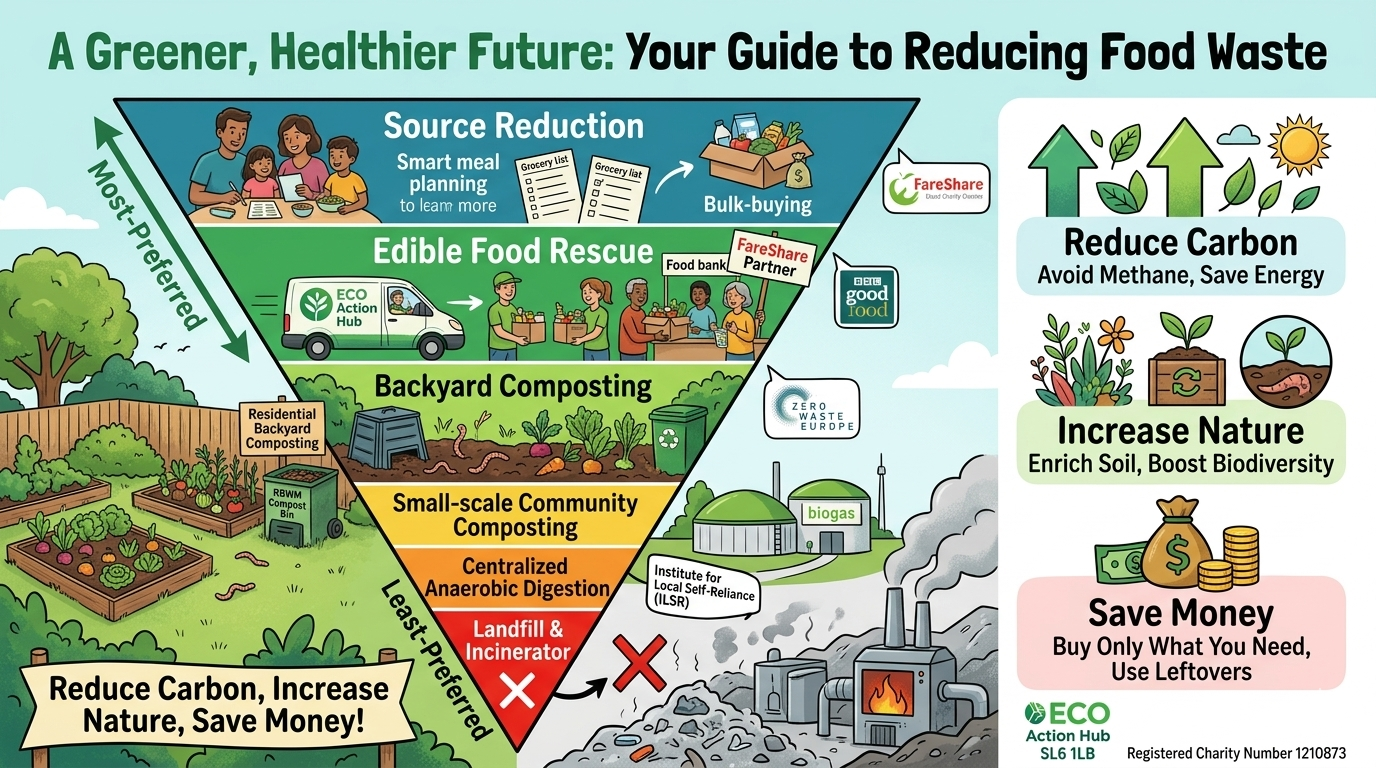
Hierarchy for Reducing & Recycling Food Scraps
According to the Institute for Local Self-Reliance, the preferred methods for handling organic discards are (from most to least preferred):
- Source Reduction: Reducing the amount of waste generated at the start.
- Edible Food Rescue: Redirecting good food to people.
- Residential Backyard Composting: Processing waste at home.
- Small-scale, Decentralized Composting: Community-level efforts.
- Centralized Composting or Anaerobic Digestion: Large-scale industrial processing.
- Mechanical Biological Mixed Waste Treatment: Processing mixed rubbish.
- Landfill & Incinerator: The least preferred option.
How does this help?
- Save Money: Buying and wasting less food puts money back in your pocket.
- Reduce Carbon: Keeping food out of general waste stops the production of harmful greenhouse gases.
- Increase Nature: Proper recycling converts waste into renewable energy.
Where can you get more help?
- FareShare – Practical tips for reducing waste.
- BBC Good Food – Guides on how to manage food waste.
- Zero Waste Europe – Information on the waste hierarchy.
For more information, visit the ECO Action Hub in Maidenhead.
Date Published: 15/02/2024 | Written by: Angela Alexander | Reviewed by: Paul Conacher
Note: This factsheet provides information only and does not constitute advice. Verify applicability to your circumstances before making decisions.